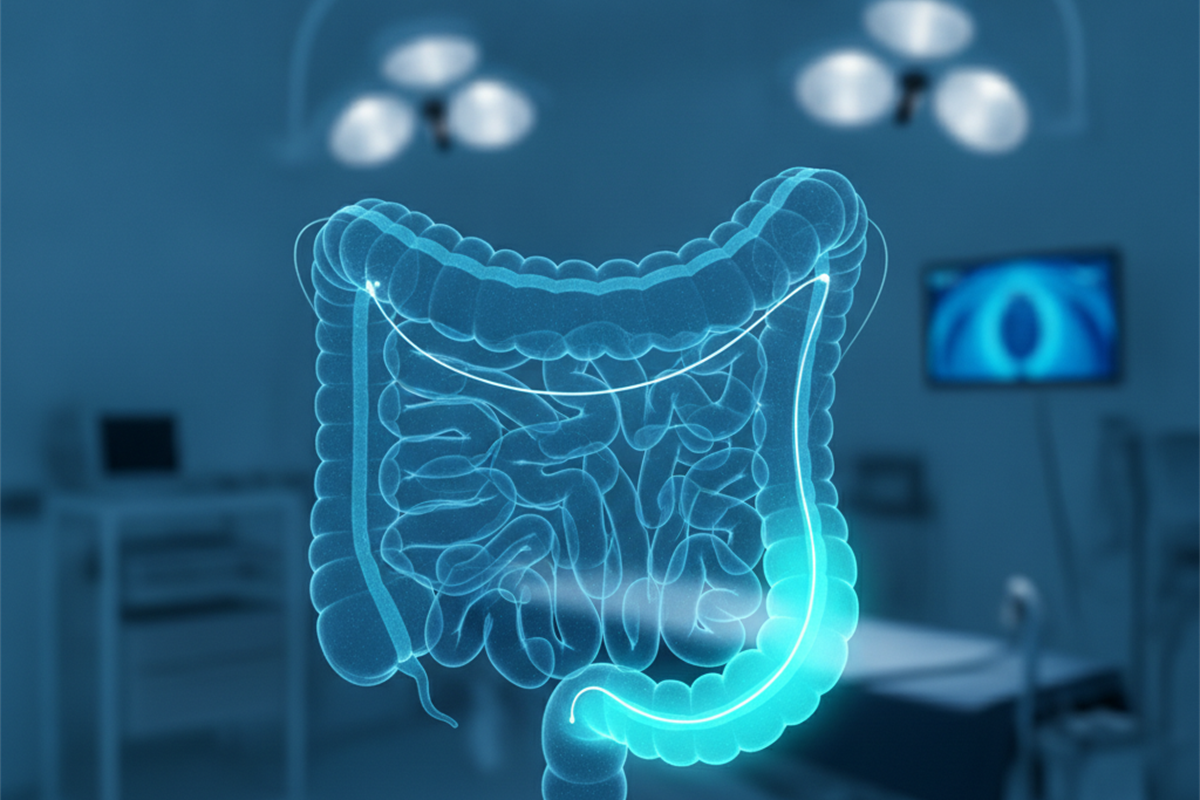

Colon cancer is one of the few cancers that can be prevented before it develops. It’s not just about detecting it early—it’s about preventing it. And yet, it remains one of the leading causes of cancer-related death in Panama, largely because most people are not diagnosed until symptoms have already appeared.
This guide explains at what age you should have your first colonoscopy, what factors may require you to have it sooner, and what warning signs you shouldn’t ignore.
Why Colon Cancer Can Be Prevented
Almost all colon cancers start as a polyp—a small, benign growth on the inner wall of the large intestine. It takes years—sometimes more than a decade—for that polyp to develop into a malignant tumor.
That’s where the opportunity lies. During a colonoscopy, the specialist doesn’t just look: if he finds a polyp, he removes it during the same procedure. The problem is eliminated before it becomes one.
That is why a colonoscopy is not just a diagnostic test. It is a preventive tool.
At what age should you have your first colonoscopy?
For a person at average risk (with no family history or symptoms), current international guidelines recommend beginning screening at age 45. This recommendation has been lowered from age 50 over the past decade, because cases among young adults have been steadily increasing.
If the screening results are normal and there are no risk factors, the standard follow-up interval is 10 years. If polyps were found and removed, the specialist will shorten that interval based on the number, size, and type of polyps found.
These figures are for general guidance only. Your gastroenterologist will determine the starting age and frequency based on your specific case.
When Should You Start Before Age 45?
There are circumstances that may lead to an earlier first colonoscopy—in some cases, many years earlier:
- Direct family history. A parent or sibling with colon cancer or advanced polyps. It is generally recommended to begin screening 10 years before the age at which the family member was diagnosed.
- Inherited syndromes. Familial adenomatous polyposis or Lynch syndrome, among others. These conditions require specialized follow-up starting at an early age.
- Inflammatory bowel disease. Long-standing ulcerative colitis or Crohn’s disease.
- Personal history of polyps or previous colorectal cancer.
If any of these apply to you, don’t wait until you turn 45. Check it out now.
Signs That Require a Doctor’s Visit, Regardless of Age
Screening is done when there are no symptoms—that’s the idea. But if symptoms have already appeared, the appointment can’t wait:
- Blood in the stool, either red or dark and tarry in appearance
- A persistent change in bowel habits lasting more than three weeks
- Stools that are thinner than usual, on a consistent basis
- Abdominal pain or cramps that do not subside
- Feeling of incomplete bowel movement
- Unexplained weight loss
- Fatigue or anemia with no apparent cause
None of these symptoms on its own means that you have cancer. The cause is almost always something else—and much less serious. But they all warrant evaluation.
What Studying Is Like in Practice
A colonoscopy is performed under sedation, so the patient feels no pain and has no memory of the procedure. The exam takes between 20 and 45 minutes.
What worries most people the most is not the exam itself but the preparation beforehand, which involves a specific diet and a bowel-cleansing solution prescribed by the medical team. It’s the uncomfortable part—and also the most important one: a properly prepared colon is what makes it possible to detect small polyps.
You’ll need someone to accompany you and drive you home, because the sedation will prevent you from driving for the rest of the day.
Get tested at CEGAS
At CEGAS, we perform comprehensive colonoscopies using high-definition equipment and guided sedation at Plaza Comercial San Fernando in Panama City. Our team of board-certified gastroenterologists guides you through the entire process, from preparation to the delivery of your results.
If you’re 45 or older, or if your family history places you in a higher-risk group, schedule an appointment and let’s discuss the best time for you to have the test.
Related Reading
- Colon Polyps: Why They Are Removed and How Often to Have a Follow-Up Colonoscopy
- Preparing for a Colonoscopy: A Step-by-Step Guide
- Rectosigmoidoscopy vs. Colonoscopy: How They Differ
This content is for informational purposes only and is not a substitute for a medical consultation. Age recommendations and intervals should be determined on an individual basis with your specialist.